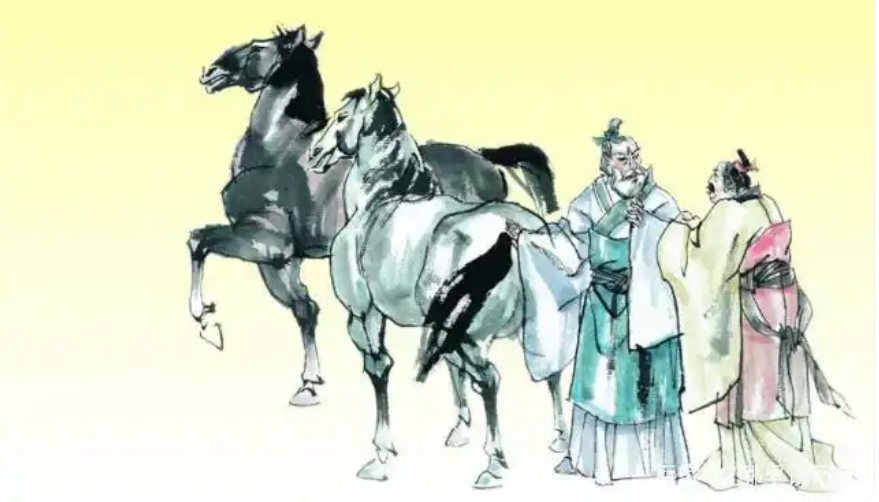
Sai Weng Shi Ma
Introduction
"Sai Weng Shi Ma" is a Chinese idiom deriving from a traditional tale that emphasizes the complexity of fortune and misfortune. It narrates the story of a wise old frontiersman whose experiences with loss and gain highlight the unpredictable nature of life, teaching that apparent misfortunes can lead to unforeseen benefits. This story has become a valuable lesson in maintaining a balanced perspective on life's ups and downs.
The Tale of the Old Frontiersman's Lost Horse
The tale begins with an old man living near the border who loses his horse after it runs away. When others offer him sympathy, he calmly questions if the loss might actually be fortunate. Surprisingly, after some time, the horse returns, bringing back several fine horses. As people congratulate him, he again questions the event, pondering whether this bounty might lead to calamity.
The story takes another turn when his son, while riding one of the new horses, falls and breaks his leg. The old man, unperturbed, suggests that this injury might not be entirely unfortunate. His perspective is validated when a large-scale invasion occurs, requiring all able-bodied young men to go to battle. Due to his injury, the son is spared from the war, which results in numerous casualties among the young men of their village.
Interpretation and Significance
The story of "Sai Weng Shi Ma" serves as an ancient illustration of the psychological concept known as "reframing," which encourages individuals to view situations from alternative perspectives. This change in viewpoint often reveals hidden positives within adverse circumstances, fostering resilience and adaptability in the face of life's challenges.
The idiom stemming from this tale can be roughly translated as "the loss of the horse may turn out to be a blessing in disguise." It encourages an understanding that life events are interconnected in unpredictable ways, and immediate judgments may not capture the true nature or future implications of an event.
Personal Reflection and Application
The tale has transcended its cultural and historical roots, offering universal wisdom applicable to modern life. It speaks to the human experience of navigating the dichotomy of joy and sorrow, success and failure. The story has personally resonated with many, including those who have faced setbacks only to find unexpected opportunities and relationships emerging from those very challenges.
For instance, one might recall moving to a new city for a job that turned out to be unsatisfactory. Despite initial disappointment, the situation could lead to discovering a vibrant community or meeting a future partner, illustrating the idiom's central message.
Psychological Perspective
Psychologists view the story as a narrative that embodies cognitive reframing, a technique wherein individuals learn to reinterpret negative situations by focusing on potential positive outcomes or lessons learned. This approach is linked to greater emotional well-being and reduced stress, as it equips individuals to cope with adversity through a more constructive mindset.
Relevance in Modern Times
In today's fast-paced world, where immediate reactions and judgments are commonplace, the wisdom of "Sai Weng Shi Ma" offers a counterbalance. It promotes the value of patience and the understanding that life is a series of interconnected events, each with its potential to bring unexpected growth and joy.
This idiom is particularly relevant in a global context, where individuals face an array of uncertainties, from personal challenges to broader socioeconomic and environmental changes. By adopting the mindset championed by the old frontiersman, people can foster a more resilient and hopeful outlook in the face of adversity.
Literary Interpretations and Adaptations
Its themes resonate across different genres and mediums, appealing to audiences with its universal message of hope and perspective.
Authors and storytellers often draw upon this tale to illustrate the unpredictable nature of life and the importance of maintaining a balanced viewpoint. Through these narratives, the idiom continues to inspire readers to find strength and positivity even in the most challenging circumstances.
Philosophical and Ethical Implications
"Sai Weng Shi Ma" also prompts philosophical reflection on the nature of happiness and suffering. It challenges the conventional understanding of these concepts, suggesting that they are not fixed states but rather fluid experiences that can transform over time.
It advocates for empathy and caution in offering judgments or advice, recognizing that each person's journey is unique and may not unfold in expected ways.








